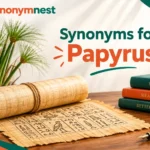
Synonyms for papyrus include related terms such as reed paper, ancient writing material, and plant-based writing sheet, depending on the context. Papyrus is best known as a writing material made from the papyrus plant and used by ancient Egyptians to record stories, laws, religious texts, and important events.
Have you ever read about ancient Egypt and wondered how people recorded information thousands of years ago? Before modern paper became common, people used materials such as papyrus, parchment, and clay tablets to preserve knowledge. Papyrus played an important role in early communication because it provided a practical surface for writing.
Learning synonyms and related words for papyrus can help students, history enthusiasts, bloggers, and English learners improve their vocabulary. However, not every related word has exactly the same meaning. For example, parchment is made from animal skin, while papyrus is made from a plant. Understanding these differences helps you choose the right word for essays, research papers, and everyday writing.
In this guide, you will discover 50 synonyms and related terms for papyrus, along with simple meanings and example sentences. You will also learn how papyrus differs from similar historical writing materials and how to use the word correctly.
What Is a Synonym for Papyrus?
The closest alternatives to papyrus depend on how the word is used. When referring to the historical writing material, suitable descriptive alternatives include reed paper, plant-based writing material, and ancient writing sheet. Words such as parchment, vellum, and scroll are related terms, but they do not mean exactly the same thing.
When papyrus refers to the plant itself, alternatives are more limited because papyrus is the name of a particular plant. In that context, phrases such as papyrus plant or sedge plant may help explain it, although they are not exact synonyms in every situation.
List of 50 Synonyms and Related Terms for Papyrus
The following list includes descriptive alternatives, historical writing materials, document types, and words associated with papyrus. These terms are grouped by meaning so you can select the most appropriate option.
Descriptive Alternatives and Writing Materials
1. Reed Paper
Meaning: A descriptive term for a writing material made from reeds or similar plants.
Example: The museum displayed a sheet of ancient reed paper.
2. Plant-Based Writing Material
Meaning: A writing surface produced from plant material.
Example: Papyrus was an important plant-based writing material in ancient Egypt.
3. Ancient Writing Material
Meaning: A material used for recording information in the distant past.
Example: Papyrus is one of the best-known ancient writing materials.
4. Plant Fiber Sheet
Meaning: A sheet made from plant fibers that can serve as a writing surface.
Example: The researcher examined the plant fiber sheet carefully.
5. Writing Sheet
Meaning: A flat surface used for writing or drawing.
Example: The scribe prepared a writing sheet before recording the message.
6. Plant Paper
Meaning: An informal description of paper or paper-like material made from plants.
Example: The guide explained how plant paper was prepared in ancient times.
7. Papyrus Sheet
Meaning: A single sheet made from the papyrus plant.
Example: The ancient text survived on a fragile papyrus sheet.
8. Historical Writing Surface
Meaning: A material or surface used for writing in an earlier period.
Example: Papyrus served as a historical writing surface for Egyptian scribes.
9. Natural Writing Material
Meaning: A writing material obtained from natural sources.
Example: Papyrus was a natural writing material made from plant stems.
10. Fiber-Based Writing Surface
Meaning: A writing surface formed from plant fibers or other fibrous materials.
Example: The conservator studied the fiber-based writing surface.
Related Historical Writing Materials
11. Parchment
Meaning: A writing material traditionally made from prepared animal skin.
Example: The medieval document was written on parchment.
12. Vellum
Meaning: A fine writing material made from animal skin, traditionally associated with calfskin.
Example: The illuminated manuscript was carefully preserved on vellum.
13. Clay Tablet
Meaning: A tablet made from clay that could be marked with symbols or writing.
Example: Ancient scribes recorded information on a clay tablet.
14. Wax Tablet
Meaning: A reusable writing surface made by coating a board with wax.
Example: The student practiced writing on a wax tablet.
15. Stone Inscription
Meaning: Words carved into a stone surface.
Example: The stone inscription preserved the ruler’s name.
16. Wooden Tablet
Meaning: A flat piece of wood used for writing or recording information.
Example: The archaeological team discovered a wooden tablet.
17. Bark Paper
Meaning: A paper-like writing material made from tree bark or inner bark.
Example: The historian compared bark paper with other traditional writing materials.
18. Bamboo Paper
Meaning: Paper made using bamboo fibers.
Example: The exhibition included samples of bamboo paper.
19. Handmade Paper
Meaning: Paper produced by hand rather than through a fully automated process.
Example: The artist used handmade paper for the historical reproduction.
20. Plant Pulp Paper
Meaning: Paper manufactured from processed plant fibers.
Example: Plant pulp paper became widely useful for modern printing.
Documents and Written Records
These terms describe things that may have been written on papyrus. They are not direct synonyms for the material itself.
21. Manuscript
Meaning: A document or book written by hand, especially one of historical importance.
Example: Researchers studied a manuscript written by an ancient scribe.
22. Scroll
Meaning: A long piece of writing material rolled for storage or reading.
Example: The historian carefully unrolled the ancient scroll.
23. Document
Meaning: A written or printed record containing information.
Example: The document described an important trade agreement.
24. Written Record
Meaning: Information preserved in written form.
Example: The papyrus provided a written record of daily transactions.
25. Historical Text
Meaning: A written work that provides information about the past.
Example: Students examined the historical text to understand Egyptian society.
26. Ancient Text
Meaning: A written work created in an earlier historical period.
Example: The ancient text contained details about religious ceremonies.
27. Chronicle
Meaning: A written account of events arranged in historical order.
Example: The chronicle recorded events from the ruler’s reign.
28. Codex
Meaning: An early book format consisting of bound pages rather than a continuous scroll.
Example: The museum displayed an early codex beside several scrolls.
29. Book
Meaning: A written or printed work consisting of pages or leaves.
Example: The ancient book preserved stories from an earlier civilization.
30. Folio
Meaning: A leaf or sheet in a manuscript or book; it can also refer to a large book format.
Example: The curator turned to the next folio in the manuscript.
Words Associated with Writing and Historical Records
31. Leaf
Meaning: One individual sheet or page in a book or manuscript.
Example: One leaf of the fragile manuscript was missing.
32. Sheet
Meaning: A flat piece of material used for writing, printing, or other purposes.
Example: The scribe wrote the message on a prepared sheet.
33. Page
Meaning: One side of a sheet in a book or document, or a numbered section of a publication.
Example: The damaged page contained an important historical note.
34. Roll
Meaning: A long piece of material wound into a cylindrical shape.
Example: The roll contained several lines of ancient writing.
35. Script
Meaning: A system of writing or a particular style of written characters.
Example: The scholar studied the script to identify its historical origin.
36. Inscription
Meaning: Words or symbols written, carved, or engraved on a surface.
Example: The inscription revealed the name of an ancient official.
37. Archive
Meaning: A collection of historical records or the place where they are preserved.
Example: The archive contained documents from several centuries ago.
38. Record
Meaning: Information preserved for future reference.
Example: The record provided evidence of an ancient trading system.
39. Register
Meaning: An organized list of names, events, or transactions.
Example: The register listed goods delivered to the royal storehouse.
40. Ledger
Meaning: A book or system used to keep financial accounts.
Example: The merchant maintained a ledger of his transactions.
Other Written Materials and Communication Terms
41. Letter
Meaning: A written message sent to another person.
Example: The archaeologist discovered a letter written on papyrus.
42. Epistle
Meaning: A formal or literary letter, often associated with historical or religious writing.
Example: The epistle discussed moral responsibilities.
43. Message
Meaning: Information communicated through speech, writing, or another method.
Example: The papyrus preserved a message sent by a government official.
44. Dispatch
Meaning: An official message or report sent to another person or place.
Example: The ruler received a dispatch about events in a neighboring region.
45. Memo
Meaning: A short written communication, usually used within an organization.
Example: The manager prepared a memo for the staff.
46. Note
Meaning: A short written piece of information or a brief reminder.
Example: The researcher made a note about the damaged fragment.
47. Journal
Meaning: A record of events, observations, or personal experiences.
Example: The explorer kept a journal of his travels.
48. Log
Meaning: A systematic record of activities, events, or observations.
Example: The official maintained a log of incoming supplies.
49. Charter
Meaning: A formal document granting rights, privileges, or authority.
Example: The historian examined the royal charter.
50. Deed
Meaning: A legal document that establishes or transfers rights, especially ownership of property.
Example: The deed confirmed the transfer of land.
Best Alternatives to Papyrus for Different Contexts
Choosing an alternative depends on what you mean by papyrus. Some terms describe the material, while others describe the writing or document preserved on it.
| Context | Suitable alternative | Why it fits |
|---|---|---|
| Describing the material | Papyrus sheet | Identifies the actual writing surface |
| Explaining its origin | Plant-based writing material | Highlights its plant source |
| Discussing ancient writing | Ancient writing material | Describes its historical use |
| Referring to a rolled document | Scroll | Describes the document’s physical form |
| Referring to animal-skin material | Parchment | Names a different historical writing material |
| Referring to a handwritten work | Manuscript | Describes the written work |
| Referring to carved words | Inscription | Identifies writing on a surface |
| Referring to preserved information | Written record | Emphasizes the information rather than the material |
Remember that parchment, vellum, and papyrus are different materials. A scroll is a format, and a manuscript is a type of written work. They can be associated with papyrus without being interchangeable with the word itself.
Papyrus vs. Parchment vs. Vellum
Papyrus, parchment, and vellum all have historical connections to writing, but they differ in how they are made.
Papyrus: Made by arranging and pressing strips from the papyrus plant. It was widely used in ancient Egypt and other parts of the Mediterranean world.
Parchment: Made from prepared animal skin. It became an important writing material in many ancient and medieval societies.
Vellum: A high-quality form of parchment traditionally made from calfskin. The term is sometimes used more broadly in historical descriptions.
For example, a researcher might say, “The text was written on papyrus,” when the material is identified as papyrus. If the document is made from prepared animal skin, parchment or vellum may be the correct term instead.
What Does Papyrus Mean?
Papyrus has two main meanings.
First, it refers to a tall, aquatic plant known scientifically as Cyperus papyrus, which historically grew in wetlands, including areas around the Nile River.
Second, papyrus refers to the writing material made from the plant’s inner stem tissue. In traditional production, strips were arranged in layers, pressed, and dried to create a writing surface.
Ancient Egyptians used papyrus for letters, administrative records, religious writings, and literary works. Because it was relatively practical to produce and transport, it helped written communication spread across different regions.
Papyrus is historically important, but it should not be confused with modern paper, parchment, or vellum.
How to Use Papyrus in a Sentence
Here are eight examples showing how to use the word naturally:
- Ancient Egyptians used papyrus to record important events.
- The museum displayed a papyrus fragment from ancient Egypt.
- The researcher translated a religious text written on papyrus.
- Papyrus was made from the stems of an aquatic plant.
- The fragile papyrus required careful conservation.
- The student learned how papyrus influenced the history of writing.
- An ancient letter survived on a piece of papyrus.
- The historian compared papyrus with parchment and other writing materials.
These examples show how the word can refer to the material, an individual fragment, or a historical writing surface.
Frequently Asked Questions
1. What is the closest synonym for papyrus?
The closest descriptive alternatives are reed paper, papyrus sheet, and plant-based writing material. These terms describe the material or its composition, although none replaces papyrus perfectly in every context.
2. Is parchment another word for papyrus?
No. Papyrus is made from a plant, while parchment is made from prepared animal skin. Both were used for writing, but they are different materials.
3. Is a scroll the same as papyrus?
No. A scroll is a document format in which a long sheet is rolled. A scroll may be made from papyrus, parchment, or another suitable material.
4. What was papyrus used for in ancient Egypt?
Papyrus was used for letters, administrative records, religious texts, literary works, and other written information. It played an important role in preserving knowledge and supporting communication.
5. Is papyrus the same as modern paper?
No. Traditional papyrus was made by pressing strips of plant tissue together, while modern paper is generally produced from processed fibers. Both can serve as writing surfaces, but their manufacturing methods differ.
Conclusion
Papyrus is an important historical writing material made from the papyrus plant. Although words such as reed paper, parchment, vellum, scroll, and manuscript are associated with it, they do not all have the same meaning. Some describe writing materials, while others refer to documents, formats, or written records.
Learning these distinctions helps you choose accurate vocabulary for essays, historical research, blog posts, and everyday communication. When writing about ancient Egyptian history, use papyrus when you mean the actual plant or writing material, and select related terms according to the context.
Understanding these 50 synonyms and related terms will help you expand your vocabulary while keeping your writing clear, accurate, and informative.