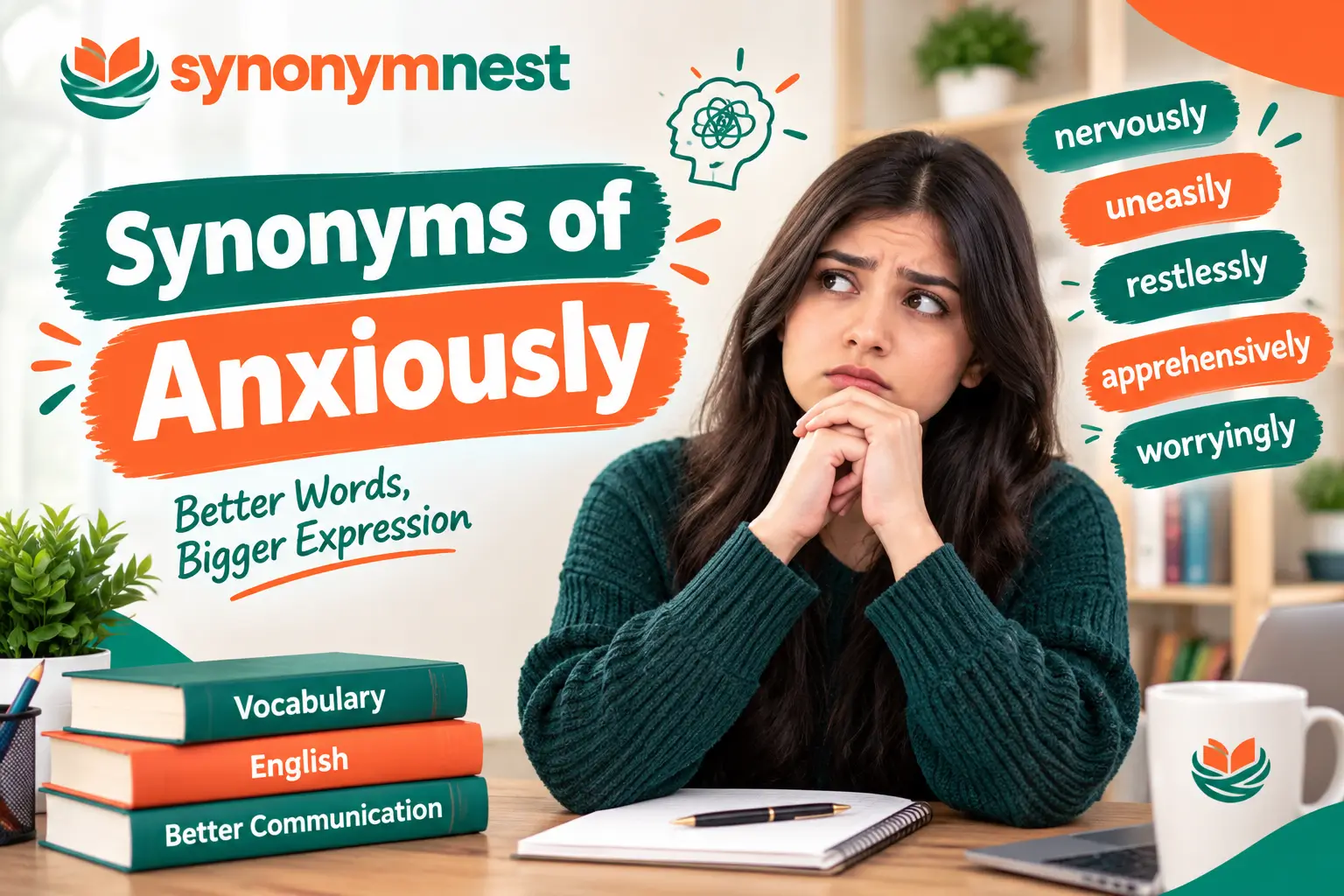
Synonyms of anxiously include nervously, worriedly, uneasily, apprehensively, fretfully, and tensely. These words describe worry, nervousness, or uncertainty while waiting for something to happen. The best synonym depends on the situation. Use “nervously” for general nervousness and “apprehensively” when someone fears what might happen next.
The word anxiously is common in everyday English. People use it when they worry about something or wait for important news. For example, a student may anxiously wait for exam results. A parent may also anxiously wait for news about a sick child.
However, using the same word too often can make your writing repetitive. Learning synonyms helps you express feelings more clearly. It also makes your writing more interesting and natural.
Some synonyms have slightly different meanings. Nervously describes tension or nervousness. Apprehensively suggests fear about a possible outcome. In contrast, eagerly expresses excitement or a strong desire for something to happen.
In this guide, you will learn 30 synonyms and related expressions for anxiously. Each word includes a simple meaning and example sentences. You will also learn how to choose the right synonym, understand common mistakes, and use antonyms correctly.
Meaning of Anxiously
Anxiously is an adverb. It means doing something in a worried, nervous, or uneasy way. It can also describe someone who is eagerly waiting for an important event.
For example:
- She waited anxiously for the doctor’s call.
- The students looked anxiously at their exam results.
- He anxiously waited for news from his family.
The word often describes uncertainty. A person may worry about what will happen next. In some situations, the word also expresses strong anticipation.
Connotative Meaning of Anxiously
The meaning of anxiously can change slightly depending on the situation. It usually describes worry, fear, or concern.
Here are some examples:
- Worry: She anxiously checked the weather before the storm.
- Fear: The child anxiously approached the unfamiliar dog.
- Anticipation: He anxiously waited for the winners to be announced.
- Concern: The parents anxiously watched their child recover.
In most cases, anxiously has a negative or uneasy feeling. However, it can also describe a mixture of hope and worry. The surrounding sentence helps readers understand the intended meaning.
Pronunciation and Word Formation
The word anxiously is pronounced approximately as ANGK-shuhs-lee.
Here are some useful facts about the word:
- Part of speech: Adverb
- Root adjective: Anxious
- Suffix: -ly
- Related noun: Anxiety
- Related adjective: Anxious
The suffix -ly often changes an adjective into an adverb. For example, nervous becomes nervously, while careful becomes carefully.
The adjective anxious comes from the Latin word anxius, which means troubled or uneasy. Its related forms describe worry, concern, and nervous anticipation.
30 Synonyms and Related Expressions for Anxiously
The following list includes direct synonyms and expressions that describe similar feelings. Some words focus on worry, while others express fear, impatience, or excitement. Choose the word that best matches your intended meaning.
1. Nervously
Meaning: In a way that shows nervousness, worry, or a lack of confidence.
Examples:
- She waited nervously outside the interview room.
- He spoke nervously in front of the audience.
Best use: Use nervously when someone feels tense or uncomfortable in a situation.
2. Worriedly
Meaning: In a way that shows concern about a problem or possible outcome.
Examples:
- She looked worriedly at the dark clouds.
- He asked worriedly whether everyone had arrived safely.
Best use: Use worriedly when someone is concerned about a problem or another person’s safety.
3. Uneasily
Meaning: In an uncomfortable, uncertain, or slightly nervous way.
Examples:
- He shifted uneasily in his chair.
- She smiled uneasily when the conversation became uncomfortable.
Best use: This word works well when someone feels uncomfortable or uncertain.
4. Apprehensively
Meaning: With fear or concern about something that may happen.
Examples:
- She entered the examination hall apprehensively.
- He opened the letter apprehensively because he feared bad news.
Best use: Use apprehensively when someone expects a possible problem or unpleasant outcome.
5. Fretfully
Meaning: In a worried, restless, or irritated way.
Examples:
- The child waited fretfully for his mother to return.
- She spoke fretfully about the delayed delivery.
Best use: This word describes worry mixed with impatience or irritation.
6. Tensely
Meaning: In a nervous or strained way.
Examples:
- The team waited tensely for the final score.
- He listened tensely as the doctor explained the situation.
Best use: Use tensely when someone feels pressure during an uncertain or suspenseful moment.
7. Fearfully
Meaning: In a way that shows fear.
Examples:
- The child looked fearfully toward the dark hallway.
- She fearfully approached the unfamiliar building.
Best use: Choose fearfully when the feeling involves fear or a sense of danger.
8. Restlessly
Meaning: In a way that makes it difficult to stay still or relaxed.
Examples:
- He paced restlessly while waiting for the news.
- She slept restlessly before the important examination.
Best use: Use restlessly when worry makes someone move around or struggle to relax.
9. Agitatedly
Meaning: In an upset, disturbed, or emotionally unsettled way.
Examples:
- He spoke agitatedly during the disagreement.
- She paced agitatedly after receiving the unexpected message.
Best use: This word describes strong emotional disturbance rather than mild worry.
10. Frantically
Meaning: In a hurried, desperate, or extremely anxious way.
Examples:
- She searched frantically for her missing passport.
- He called frantically when he realized he was lost.
Best use: Use frantically when someone feels intense pressure or needs to act quickly.
11. Impatiently
Meaning: In a way that shows frustration because something is taking too long.
Examples:
- He tapped his foot impatiently while waiting.
- She checked the clock impatiently before the meeting.
Best use: Choose this word when worry is mixed with frustration about a delay.
12. Cautiously
Meaning: In a careful way that helps prevent danger or mistakes.
Examples:
- She cautiously opened the unfamiliar email.
- He cautiously approached the injured animal.
Best use: Use cautiously when uncertainty makes someone act carefully. Remember that caution does not always mean anxiety.
13. Hesitantly
Meaning: In an uncertain or reluctant way.
Examples:
- She answered hesitantly when asked about the incident.
- He hesitantly entered the room.
Best use: This word is useful when someone pauses because they are unsure what to do or say.
14. Doubtfully
Meaning: In a way that shows uncertainty or a lack of belief.
Examples:
- She looked doubtfully at the proposed solution.
- He responded doubtfully when asked whether the plan would work.
Best use: Use doubtfully when someone questions whether something is true or likely to succeed.
15. Eagerly
Meaning: With excitement, interest, or a strong desire for something to happen.
Examples:
- The children eagerly awaited the school trip.
- She listened eagerly to the announcement.
Best use: Use eagerly for positive anticipation. Unlike anxiously, it usually does not suggest worry.
16. Excitedly
Meaning: In a way that shows happiness, enthusiasm, or excitement.
Examples:
- The students excitedly discussed their upcoming trip.
- He excitedly shared the good news with his family.
Best use: Choose this word when someone feels happy about an upcoming event.
17. Expectantly
Meaning: In a way that shows someone believes something is about to happen.
Examples:
- The audience waited expectantly for the speaker.
- She looked expectantly at her friend for an answer.
Best use: Use expectantly when someone is waiting for a response or event. The word does not necessarily suggest worry.
18. Hopefully
Meaning: In a way that shows hope for a positive outcome.
Examples:
- She looked hopefully toward the entrance.
- He waited hopefully for a positive response.
Best use: Choose hopefully when the focus is on hope rather than nervousness.
19. Timidly
Meaning: In a shy or hesitant way.
Examples:
- The new student timidly introduced herself.
- He timidly asked whether he could join the group.
Best use: Use timidly when nervousness is connected to shyness or a lack of confidence.
20. Shakily
Meaning: In an unsteady way, often because of fear, weakness, or nervousness.
Examples:
- She spoke shakily while describing the frightening experience.
- He stood shakily after the exhausting journey.
Best use: This word works when nervousness affects someone’s voice or movements.
21. Edgily
Meaning: In a tense, nervous, or easily irritated way.
Examples:
- He laughed edgily during the uncomfortable conversation.
- She waited edgily for the interview to begin.
Best use: Use edgily in informal writing when someone feels tense or nervous.
22. Jitterily
Meaning: In a way that shows nervous energy or physical restlessness.
Examples:
- He moved jitterily before his first public speech.
- She laughed jitterily while waiting for her turn.
Best use: This informal word describes visible nervousness, especially when someone struggles to stay calm.
23. With Concern
Meaning: In a way that shows worry, care, or attention to a possible problem.
Examples:
- She asked with concern about her colleague’s recovery.
- He watched with concern as the child crossed the road.
Best use: This expression is useful in professional writing and everyday conversations. It often sounds more natural than the less common word concernedly.
24. Solicitously
Meaning: In a caring and attentive way that shows concern for another person’s needs.
Examples:
- The nurse solicitously asked whether the patient needed help.
- He solicitously checked that his guest was comfortable.
Best use: This is a formal word for attentive care. It describes concern for another person rather than personal anxiety.
25. Suspiciously
Meaning: In a way that shows mistrust or a belief that something may be wrong.
Examples:
- She looked suspiciously at the unexpected message.
- He watched suspiciously as the stranger approached.
Best use: Use suspiciously when someone doubts another person’s intentions. It is not a direct synonym for anxiously in every situation.
26. Insecurely
Meaning: In a way that shows a lack of confidence or a feeling of uncertainty.
Examples:
- He spoke insecurely during the presentation.
- She felt insecure about sharing her work with others.
Best use: Use this word when worry comes from self-doubt or low confidence. In many situations, “with insecurity” or “without confidence” sounds more natural.
27. Longingly
Meaning: With a strong desire for someone or something, often with sadness.
Examples:
- She looked longingly at the photograph of her family.
- He gazed longingly at the house where he grew up.
Best use: Use longingly when someone deeply wants something. It expresses desire rather than anxiety.
28. With Apprehension
Meaning: With worry or fear about what might happen.
Examples:
- She opened the examination results with apprehension.
- He approached the difficult conversation with apprehension.
Best use: This expression works well in formal writing, essays, and stories about uncertain situations.
29. With Uneasiness
Meaning: With discomfort, nervousness, or a feeling that something may be wrong.
Examples:
- She waited with uneasiness for the final decision.
- He listened with uneasiness as the storm grew stronger.
Best use: Use this expression when someone feels uncomfortable or uncertain about a situation.
30. With Nervous Anticipation
Meaning: With a mixture of excitement and nervousness about an upcoming event.
Examples:
- The students waited with nervous anticipation for their results.
- She watched with nervous anticipation as the winners were announced.
Best use: This expression is useful when someone is both excited and worried about an uncertain outcome.
How to Choose the Best Synonym for Anxiously
The best synonym depends on the emotion you want to express. Think about the situation and how strongly the person feels.
| Intended meaning | Best alternative | Example |
|---|---|---|
| General nervousness | Nervously | He waited nervously. |
| Concern about a problem | Worriedly | She looked worriedly at the report. |
| Fear about the future | Apprehensively | He entered apprehensively. |
| Physical restlessness | Restlessly | She paced restlessly. |
| Extreme urgency | Frantically | They searched frantically. |
| Frustration while waiting | Impatiently | He waited impatiently. |
| Positive anticipation | Eagerly | They listened eagerly. |
| Happy excitement | Excitedly | She spoke excitedly. |
| Careful action | Cautiously | He proceeded cautiously. |
| Formal expression of worry | With apprehension | She opened the letter with apprehension. |
These words cannot always replace one another. For example, “She waited anxiously for the results” suggests worry about the outcome. However, “She waited eagerly for the results” focuses on excitement and interest.
Always consider the context before choosing a synonym.
Anxiously vs. Nervously vs. Apprehensively
These three words have similar meanings, but they emphasize different feelings.
- Anxiously: Often combines worry with anticipation about an uncertain outcome.
- Nervously: Focuses on tension, discomfort, or nervousness in a particular situation.
- Apprehensively: Emphasizes fear or concern about something that may happen.
Consider these examples:
- “She anxiously waited for the medical results.” This suggests worry about the outcome.
- “She nervously spoke in front of the audience.” This focuses on her nervousness while speaking.
- “She apprehensively entered the unfamiliar building.” This suggests concern about what might happen inside.
Understanding these differences helps you choose more accurate words and communicate your ideas clearly.
Formal and Informal Alternatives to Anxiously
Different situations require different words. A formal report may need a different expression from a casual conversation.
For formal writing:
- With apprehension
- With concern
- Apprehensively
- Uneasily
- With nervous anticipation
For everyday conversations:
- Nervously
- Worriedly
- Restlessly
- Impatiently
- Eagerly, when positive anticipation is intended
For storytelling:
- Fearfully
- Tensely
- Frantically
- Shakily
- With nervous anticipation
These are suggestions rather than strict rules. Choose the expression that best fits your sentence and intended meaning.
Common Mistakes When Using Anxiously
English learners sometimes use related words as if they have exactly the same meaning. Avoid these common mistakes.
1. Using “eagerly” when you mean worry
Eagerly usually expresses excitement or interest. Use anxiously or apprehensively when the sentence focuses on concern.
2. Using “suspiciously” for ordinary nervousness
Suspiciously suggests mistrust. It is appropriate when someone believes that another person or situation may be dishonest or unsafe.
3. Using “frantically” for mild concern
Frantically describes intense urgency or desperation. For ordinary nervousness, nervously is usually a better choice.
4. Creating unnatural adverbs
Adding -ly to an adjective does not always produce a natural expression. For example, “with concern” often sounds better than “concernedly.”
5. Repeating the same word too often
Using anxiously in every paragraph can make your writing repetitive. Try different synonyms, but make sure they preserve the original meaning.
Antonyms of Anxiously
Antonyms describe opposite or contrasting feelings. The best choice depends on whether anxiously refers to worry, tension, or uncertainty.
- Calmly: In a peaceful and controlled way. Example: She calmly explained the situation.
- Confidently: With belief in your abilities or success. Example: He confidently answered the question.
- Peacefully: Without disturbance or conflict. Example: The baby slept peacefully.
- Without worry: In a way that shows no concern. Example: They spent the afternoon without worry.
- In a relaxed manner: Without tension or nervousness. Example: She spoke in a relaxed manner.
- Composedly: In a controlled and calm way. Example: She responded composedly to the difficult question.
These expressions are not exact opposites in every situation. For example, confidently contrasts with uncertainty, while peacefully emphasizes a lack of disturbance.
Frequently Asked Questions
1. What does anxiously mean?
Anxiously means in a worried, nervous, or uneasy way. It often describes someone waiting for important news or facing an uncertain situation.
2. What is the best synonym for anxiously?
Nervously is a useful general synonym. However, worriedly is better when the focus is concern, while apprehensively is more suitable when someone fears a possible outcome.
3. Is anxiously positive or negative?
The word usually suggests worry or uneasiness. However, it can also describe eager anticipation. The surrounding sentence helps readers understand the intended meaning.
4. What is the difference between anxiously and eagerly?
Anxiously often suggests worry about an uncertain outcome. Eagerly expresses excitement or a strong desire for something to happen. A person can feel both emotions at the same time.
5. What is a formal synonym for anxiously?
“With apprehension” and “with concern” are useful formal expressions. Apprehensively is another good choice when a sentence describes fear or uncertainty about a future event.
6. Can you use anxiously in a sentence?
Yes. For example: “The family anxiously waited for news about their missing dog.” The word shows that the family felt worried while waiting for information.
7. What are some antonyms of anxiously?
Common contrasting expressions include calmly, confidently, peacefully, and in a relaxed manner. Each describes a different way of acting without worry or tension.
Conclusion
Learning synonyms of anxiously can improve your English vocabulary and help you describe emotions more clearly. Words such as nervously, worriedly, uneasily, and apprehensively are useful when expressing concern or fear.
Other words, such as eagerly and excitedly, work better when someone looks forward to something positive. Expressions like with concern and with apprehension can also make formal writing clearer.
The most important thing to remember is that similar words do not always have identical meanings. Consider the situation, the intensity of the emotion, and the tone of your sentence before choosing an alternative.
Practice these words in conversations, essays, emails, and stories. With regular use, you can make your writing more natural, varied, and effective while keeping your meaning clear.