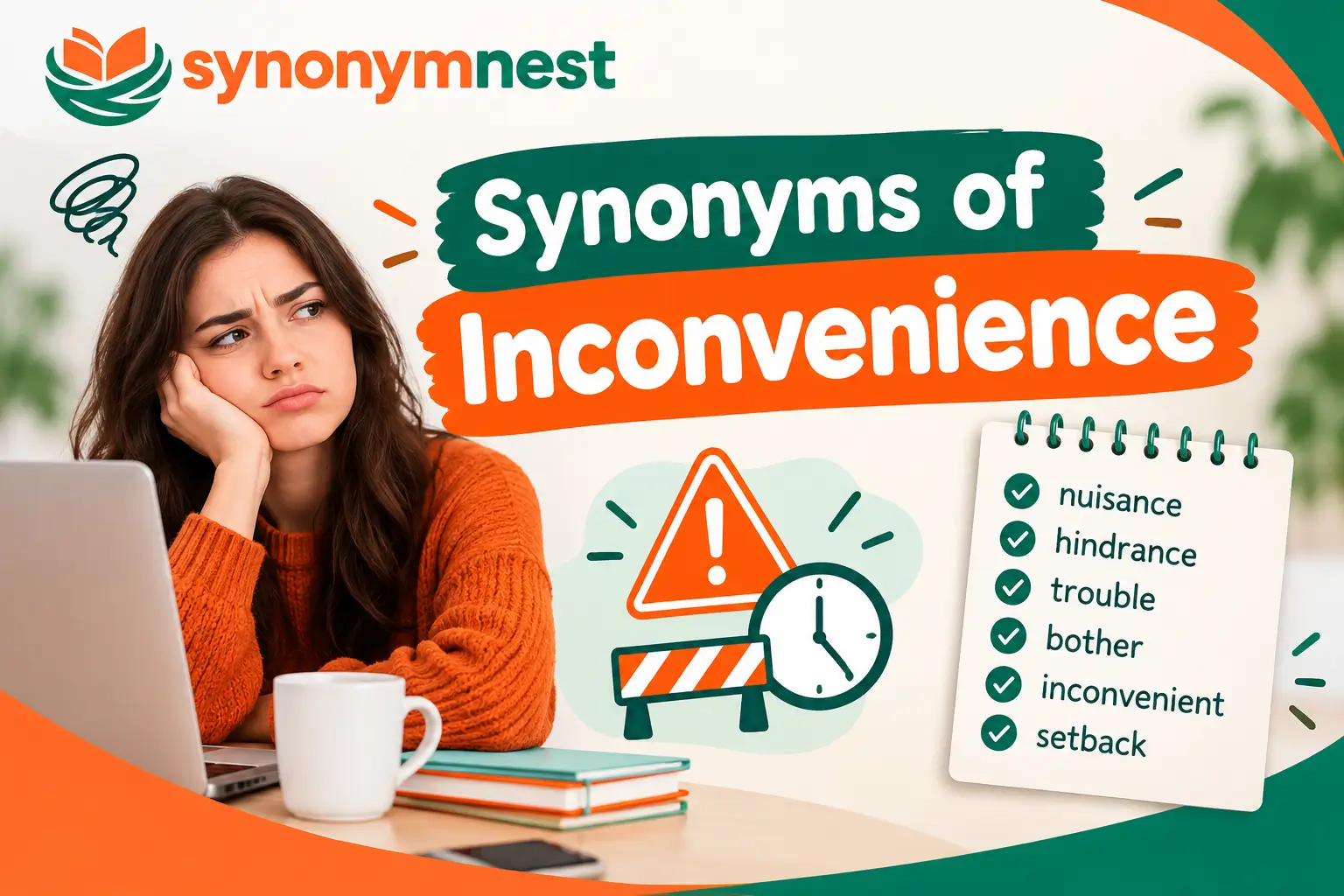
Synonyms of inconvenience include hassle, trouble, bother, nuisance, difficulty, problem, and imposition. These words describe situations that cause discomfort, delay, extra effort, or annoyance. The best synonym depends on the context, because some words describe minor problems while others refer to interruptions, disadvantages, or more serious difficulties.
Everyday life often involves situations that make things less convenient. A delayed flight, a broken computer, a road closure, or a last-minute schedule change can create inconvenience. Although the word is useful in daily conversations, repeating it too often can make writing sound dull.
Learning alternative words helps you express problems more precisely. For example, hassle sounds informal, imposition is useful when talking about causing someone extra effort, and disruption describes an interruption to normal activities. Choosing the right word can improve your emails, essays, conversations, and professional communication.
In this guide, you will discover 30 synonyms of inconvenience with clear definitions and practical examples. You will also learn their differences, common expressions, antonyms, pronunciation, word formation, and appropriate usage in formal and informal situations.
What Does Inconvenience Mean?
Inconvenience is a noun that describes a situation, event, or condition that causes difficulty, discomfort, delay, or extra effort. It can also be used as a verb meaning to cause someone trouble or make something less convenient.
For example:
- The road closure caused considerable inconvenience for commuters.
- We apologize for the inconvenience caused by the service interruption.
- I do not want to inconvenience you by asking for another favor.
The word usually describes a negative experience, often one that is temporary or manageable. However, its seriousness depends on the situation. A short waiting period may be a minor inconvenience, while a prolonged transport shutdown may cause substantial disruption.
Connotative Meaning of Inconvenience
The word generally carries a negative connotation because it suggests that something has become more difficult or less comfortable than expected.
- Minor inconvenience: A small problem that requires extra time or effort.
- Practical inconvenience: A situation that interferes with everyday activities.
- Emotional inconvenience: A problem that causes irritation, frustration, or discomfort.
- Professional inconvenience: An interruption or difficulty affecting work, customers, or business operations.
For example, missing a bus may cause a minor inconvenience, whereas a cancelled flight that prevents someone from attending an important meeting may create a much greater problem.
Etymology of Inconvenience
The word inconvenience developed through French and Latin linguistic roots associated with suitability, agreement, and convenience. Its history is connected to the word convenient, which describes something suitable or easy to use.
In modern English, the prefix in- generally expresses negation in this word family. The word is now widely used in everyday speech, business communication, travel, and customer service.
Pronunciation of Inconvenience
- US pronunciation: /ˌɪnkənˈviːniəns/
- UK pronunciation: /ˌɪnkənˈviːniəns/
- Syllables: in-con-ven-ience
- Part of speech: Noun and verb
The stress falls on the third syllable, ven. In everyday speech, the exact vowel quality may vary slightly between speakers and accents.
Word Formation of Inconvenience
The word belongs to a family of related forms:
- Convenience (noun): The quality of being easy or suitable.
- Convenient (adjective): Easy, suitable, or practical.
- Inconvenient (adjective): Causing difficulty or making something less practical.
- Inconvenience (noun): A difficulty, annoyance, or disruption.
- Inconvenience (verb): To cause someone trouble or extra effort.
- Inconveniently (adverb): In a way that causes difficulty or discomfort.
Examples:
- Online banking offers convenience.
- The meeting time is convenient for everyone.
- The unexpected closure was inconvenient.
- We apologize for any inconvenience.
- I do not want to inconvenience my colleagues.
30 Synonyms of Inconvenience With Meanings and Examples
The following words are useful alternatives, but they are not interchangeable in every sentence. Some describe a problem itself, while others emphasize annoyance, delay, effort, or an obstacle.
1. Trouble
Meaning: A problem or difficulty that causes concern or extra effort.
Examples:
- The broken printer caused trouble for the office staff.
- Thank you for going to the trouble of helping me.
Best use: General conversations and situations involving practical difficulties.
2. Difficulty
Meaning: A situation in which something is hard to do, understand, or manage.
Examples:
- She had difficulty finding the correct address.
- We experienced difficulty accessing the online system.
Best use: Tasks, procedures, and activities that require additional effort.
3. Problem
Meaning: Something that needs attention, an explanation, or a solution.
Examples:
- The faulty internet connection created a problem.
- We resolved the problem before the meeting began.
Best use: General and professional communication when a specific issue needs to be addressed.
4. Hassle
Meaning: An annoying or complicated situation that requires unnecessary effort.
Examples:
- Changing flights twice was a real hassle.
- Online check-in saves time and reduces the hassle of airport queues.
Best use: Informal conversations about frustrating practical situations.
5. Bother
Meaning: Trouble, effort, or annoyance caused by doing something.
Examples:
- Sorry for the bother; I need to change the appointment.
- Preparing the documents was more bother than expected.
Best use: Casual speech and polite expressions involving small difficulties.
6. Nuisance
Meaning: A person, thing, or situation that is annoying or troublesome.
Examples:
- Constant notifications became a nuisance during work.
- The construction noise was a nuisance for nearby residents.
Best use: Repeated annoyances or things that disturb comfort.
7. Imposition
Meaning: An unwanted demand or burden placed on another person.
Examples:
- I hope this last-minute request is not an imposition.
- Asking her to work on her day off felt like an imposition.
Best use: Polite, formal, or professional situations involving someone else’s time or effort.
8. Annoyance
Meaning: A feeling of irritation or something that causes irritation.
Examples:
- The repeated delays became a source of annoyance.
- He expressed his annoyance at the sudden schedule change.
Best use: Situations where irritation is an important part of the experience.
9. Discomfort
Meaning: A feeling of physical or emotional uneasiness.
Examples:
- The uncomfortable chair caused considerable discomfort.
- The unexpected question created some social discomfort.
Best use: Physical uneasiness, awkwardness, or emotional unease.
10. Disturbance
Meaning: An interruption or event that interferes with peace or normal activity.
Examples:
- The loud music caused a disturbance in the hotel.
- The unexpected announcement created a disturbance during the meeting.
Best use: Situations involving noise, peace, or interrupted activities.
11. Disruption
Meaning: An interruption that prevents an activity or system from operating normally.
Examples:
- Heavy snowfall caused major disruption to public transport.
- The power outage disrupted business operations.
Best use: Travel, workplaces, public services, and organized activities.
12. Delay
Meaning: A situation in which something happens later than expected.
Examples:
- The train delay inconvenienced hundreds of passengers.
- We apologize for the delay in responding to your request.
Best use: Missed schedules, waiting periods, and postponed activities.
13. Complication
Meaning: An additional problem that makes a situation more difficult.
Examples:
- A missing document created a complication in the application process.
- The unexpected technical issue added another complication to the project.
Best use: Situations that become more difficult because of extra problems.
14. Setback
Meaning: A problem that delays progress or makes achievement more difficult.
Examples:
- The equipment failure was a setback for the project.
- Losing the reservation created a small setback in our travel plans.
Best use: Plans, projects, goals, and progress that experience delays.
15. Obstacle
Meaning: Something that blocks or prevents progress.
Examples:
- The closed entrance became an obstacle for visitors.
- A lack of reliable transport was an obstacle to attending classes.
Best use: Barriers that make it harder to achieve a goal.
16. Hindrance
Meaning: Something that makes progress or action more difficult.
Examples:
- Poor communication was a hindrance to completing the task.
- The damaged road became a hindrance to local traffic.
Best use: Formal writing about factors that slow or obstruct progress.
17. Impediment
Meaning: A barrier or condition that prevents or slows an activity.
Examples:
- Outdated software was an impediment to efficient work.
- The missing approval became an impediment to launching the service.
Best use: Formal, academic, and professional contexts.
18. Frustration
Meaning: The feeling of being upset because something is difficult or does not happen as expected.
Examples:
- Repeated website errors caused considerable frustration.
- She expressed her frustration with the booking process.
Best use: When the emotional effect of a difficulty matters more than the difficulty itself.
19. Irritation
Meaning: A feeling of annoyance caused by something unpleasant or repetitive.
Examples:
- Constant reminders became a source of irritation.
- The unexpected interruption caused irritation among the team.
Best use: Mild anger or annoyance.
20. Drawback
Meaning: A disadvantage or negative feature of a situation, plan, or product.
Examples:
- The main drawback of the location is its distance from public transport.
- One drawback of the new system is the complicated setup process.
Best use: Comparing options or explaining disadvantages rather than describing every kind of inconvenience.
21. Issue
Meaning: A matter, concern, or problem that needs attention.
Examples:
- We encountered an issue with the payment system.
- The scheduling issue was resolved quickly.
Best use: Neutral, professional communication where a problem needs to be discussed tactfully.
22. Burden
Meaning: A responsibility, cost, or difficulty that is hard to manage.
Examples:
- The extra paperwork became a burden for the employees.
- Additional travel expenses placed a burden on the family.
Best use: Situations involving ongoing responsibility, expense, or effort.
23. Hardship
Meaning: A condition involving serious difficulty, suffering, or deprivation.
Examples:
- The prolonged transport shutdown caused hardship for local families.
- Financial hardship made it difficult for him to continue his education.
Best use: Serious difficulties rather than ordinary minor inconveniences.
24. Misfortune
Meaning: An unfortunate event or an instance of bad luck.
Examples:
- Missing the connection was an unfortunate misfortune during the trip.
- Their misfortune was made worse by the sudden cancellation.
Best use: Unlucky events. This is not a direct replacement for inconvenience in most sentences.
25. Adversity
Meaning: Difficult or unfavorable circumstances that test a person’s ability to cope.
Examples:
- The community worked together through economic adversity.
- She remained determined despite personal adversity.
Best use: Serious or prolonged challenges, not routine everyday annoyances.
26. Interruption
Meaning: An event that temporarily stops an activity.
Examples:
- The phone call caused an interruption during the presentation.
- We completed the task without interruption.
Best use: Meetings, conversations, work, and other activities that are stopped temporarily.
27. Challenge
Meaning: A difficult task or situation that requires effort or skill.
Examples:
- Learning the new booking system was a challenge.
- Finding affordable accommodation became a challenge.
Best use: Difficult situations that require a response or solution. A challenge can also have a positive tone.
28. Strain
Meaning: Pressure, stress, or excessive demand on a person, resource, or relationship.
Examples:
- The unexpected repair bill placed a strain on the household budget.
- Repeated schedule changes put a strain on the team.
Best use: Situations involving sustained pressure or stress.
29. Encumbrance
Meaning: Something that restricts freedom of movement or makes a task more difficult.
Examples:
- The unnecessary paperwork became an encumbrance to the process.
- Carrying too much luggage was an encumbrance during the journey.
Best use: Formal or advanced writing about burdens and restrictions.
30. Mess
Meaning: A confused, disorganized, or difficult situation.
Examples:
- The last-minute changes made the travel schedule a mess.
- Poor planning turned a simple task into a mess.
Best use: Informal speech when a situation has become disorganized or difficult to manage.
Best Synonyms of Inconvenience by Context
Choosing an appropriate alternative depends on what you want to communicate. A word that works in a casual conversation may not be suitable for a formal apology.
| Situation | Best alternatives | Example |
|---|---|---|
| Everyday conversation | Hassle, bother, trouble | The extra paperwork was a hassle. |
| Formal apology | Inconvenience, disruption | We apologize for the disruption. |
| Customer service | Issue, delay, inconvenience | We regret the delay in processing your order. |
| Travel problems | Delay, disruption, hassle | The cancellation caused travel disruption. |
| Workplace difficulties | Complication, obstacle, issue | The missing report created an issue. |
| Extra demands on others | Imposition, burden | I hope the request is not an imposition. |
| Emotional reactions | Annoyance, frustration | The repeated errors caused frustration. |
| Serious difficulties | Hardship, adversity | The community faced economic hardship. |
Difference Between Inconvenience and Similar Words
Although many alternatives share a related meaning, each word emphasizes a different aspect of a situation.
Inconvenience vs. hassle: Inconvenience is suitable for both formal and informal communication. Hassle is more informal and often emphasizes annoyance or unnecessary effort.
Inconvenience vs. problem: A problem generally requires a solution, while an inconvenience makes something less easy, comfortable, or practical. A problem may or may not cause inconvenience.
Inconvenience vs. nuisance: An inconvenience is a difficult or uncomfortable situation. A nuisance is usually a person, thing, or recurring event that annoys someone.
Inconvenience vs. disruption: An inconvenience may involve extra effort or discomfort. A disruption specifically interrupts normal activity or service.
Inconvenience vs. imposition: Inconvenience describes the difficulty itself. Imposition emphasizes an unwanted demand placed on another person’s time, resources, or goodwill.
Inconvenience vs. hardship: Inconvenience often refers to manageable difficulties, whereas hardship describes more serious or prolonged suffering.
Inconvenience vs. drawback: An inconvenience is an actual difficulty or annoyance. A drawback is a disadvantage associated with a choice, plan, or product.
Common Phrases Using Inconvenience
Learning common expressions helps you use the word naturally in conversations, emails, and professional writing.
- Sorry for the inconvenience: A polite apology for causing trouble.
- We apologize for any inconvenience caused: A formal expression frequently used in customer service.
- At your convenience: At a time that suits the other person.
- Without inconvenience: Without causing difficulty or trouble.
- To inconvenience someone: To cause someone extra effort or discomfort.
- Minor inconvenience: A small problem that is relatively easy to manage.
- Considerable inconvenience: A significant amount of difficulty or disruption.
Examples:
- We apologize for any inconvenience caused by the scheduled maintenance.
- Please contact us at your convenience.
- I hope changing the appointment will not inconvenience you.
- The temporary closure caused only a minor inconvenience.
Formal Alternatives to “Sorry for the Inconvenience”
In professional communication, varying your wording can make apologies sound more specific and helpful.
- “We apologize for the delay and appreciate your patience.”
- “We regret the disruption to your service.”
- “Thank you for your patience while we resolve this issue.”
- “We understand that this change may have caused difficulties.”
- “We apologize for the additional effort this situation has required.”
Whenever possible, explain what happened and what you are doing to resolve it. A clear apology with a practical next step is often more effective than a general expression of regret.
Antonyms of Inconvenience
Antonyms describe ease, comfort, or beneficial conditions rather than difficulty or disruption.
1. Convenience
The quality of being easy, practical, or suitable.
Example: Online payments offer convenience to busy customers.
2. Ease
The absence of difficulty or excessive effort.
Example: The updated system allows users to complete applications with ease.
3. Comfort
A state of physical or emotional well-being.
Example: The hotel provided comfort after a long journey.
4. Advantage
A favorable feature that provides a benefit.
Example: Living near the station is an advantage for commuters.
5. Benefit
A positive result or helpful effect.
Example: Flexible working hours provide a significant benefit to employees.
These words are not exact opposites in every context. For example, advantage and benefit usually describe positive features rather than the direct absence of inconvenience.
Common Mistakes to Avoid
1. Treating every related word as an exact synonym.
Words such as hardship and adversity describe more serious difficulties than ordinary inconvenience.
2. Using informal words in formal situations.
Hassle may be appropriate in casual conversation, but difficulty, disruption, or inconvenience may sound more professional.
3. Confusing a feeling with a situation.
Frustration and annoyance often describe emotions, while delay and disruption identify events or circumstances.
4. Repeating the same keyword unnecessarily.
Use natural variations and related terms instead of repeating “synonyms of inconvenience” in every paragraph.
5. Using unnatural expressions.
For example, say “The cancellation caused disruption” rather than “The cancellation caused troublemaking.”
Frequently Asked Questions
What is the best synonym for inconvenience?
Hassle, trouble, bother, and difficulty are useful alternatives. The best choice depends on the situation, tone, and degree of difficulty.
What is a formal synonym for inconvenience?
Difficulty, disruption, imposition, and inconvenience itself can work in formal writing. Choose the word that most accurately describes the situation.
Is hassle the same as inconvenience?
Not exactly. Both can describe an unpleasant or difficult situation, but hassle is more informal and often emphasizes annoyance or unnecessary effort.
What is the opposite of inconvenience?
Convenience is the most direct opposite. Other related words include ease and comfort, depending on the sentence.
How do you use inconvenience in a sentence?
You can use it as a noun or a verb. For example, “The road closure caused an inconvenience” and “I do not want to inconvenience you.”
Is inconvenience a countable or uncountable noun?
It can be both, depending on its meaning. It is often uncountable when referring to trouble in general, as in “We apologize for the inconvenience.” It can be countable when referring to a particular problem, as in “The delay was a minor inconvenience.”
Conclusion
Learning synonyms of inconvenience helps you describe problems, delays, discomfort, and extra effort more precisely. Words such as hassle, bother, and nuisance are useful in everyday conversations, while imposition, disruption, and difficulty may be more suitable in formal or professional contexts.
Remember that related words do not always have identical meanings. A drawback is a disadvantage, frustration is often an emotional response, and hardship describes more serious difficulties. Understanding these distinctions will help you choose vocabulary that fits your intended meaning.
Practice using these alternatives in emails, conversations, essays, and everyday situations. With regular practice, you can improve your vocabulary, avoid repetition, and communicate more naturally and confidently.