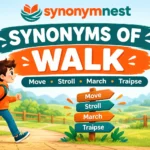
A synonym for walk is stroll, which means to move on foot at a relaxed pace. Other useful synonyms include stride, march, saunter, wander, hike, trek, and pace. Each word describes a different way of moving, so choosing the right synonym depends on the speed, purpose, direction, and feeling of the action.
The word “walk” is one of the most common words in everyday English. We use it when talking about going to school, exercising in a park, traveling short distances, or enjoying time outdoors. Although walk is simple and useful, repeating it in every sentence can make writing sound less interesting.
Learning synonyms of walk helps you describe movement more precisely. For example, stroll suggests a relaxed walk, while stride describes walking with long, confident steps. Similarly, tiptoe means walking quietly, and march suggests firm, rhythmic movement.
These alternatives are useful for students, English learners, teachers, bloggers, and creative writers. In this guide, you will discover 30 synonyms and related movement words, their meanings, and easy example sentences. You will also learn how to choose the right word for different situations and avoid common vocabulary mistakes.
Meaning of Walk
Walk is a verb that means moving on foot by taking steps, usually at a normal speed. It can also be used as a noun to describe an activity or journey made on foot.
Examples:
- I walk to school every morning.
- We went for a walk after dinner.
- She walked across the street carefully.
- They enjoy walking through the park on weekends.
As a verb, walk describes the action of moving on foot. As a noun, it can refer to the activity itself, as in “a morning walk.”
Connotation of Walk
The word walk is generally neutral, but its meaning can suggest different feelings depending on the context.
- Positive connotation: Walking may suggest health, relaxation, freedom, or enjoyment.
- Negative connotation: It can suggest tiredness or difficulty when someone has to walk a long distance.
- Neutral connotation: It can simply describe moving from one place to another on foot.
For example, “She took a peaceful walk along the beach” creates a relaxing feeling, while “He had to walk for miles in the rain” suggests discomfort.
Pronunciation and Word Forms
- Pronunciation: /wɔːk/ in many British and American dictionary transcriptions, although pronunciation varies by accent.
- Syllables: One syllable.
- Root word: Walk.
- Past tense: Walked.
- Present participle: Walking.
- Third-person singular: Walks.
- Related noun: Walker.
Examples include “I walked home yesterday,” “She is walking to the store,” and “He walks to work every day.”
30 Synonyms of Walk with Examples and Meanings
The following words include close synonyms of walk and related expressions that describe specific types of movement. Some are interchangeable with walk only in particular contexts, so always consider the intended meaning.
1. Stroll (Verb)
Meaning: To walk slowly and casually, usually for pleasure.
Stroll is an excellent alternative when describing a relaxed walk without a hurry.
Examples:
- We strolled through the park after lunch.
- She likes to stroll along the beach in the evening.
2. Wander (Verb)
Meaning: To walk around without a fixed destination or direction.
Use wander when someone explores an area casually or moves without following a particular route.
Examples:
- We wandered through the old streets of the city.
- The children wandered around the garden.
3. Stride (Verb)
Meaning: To walk with long, confident steps.
Stride often suggests confidence, determination, or purposeful movement.
Examples:
- He strode confidently into the meeting room.
- She strode across the field to greet her friend.
4. March (Verb)
Meaning: To walk with firm, regular steps, often in a group or with determination.
The word is commonly used for soldiers, organized groups, demonstrations, and purposeful movement.
Examples:
- The soldiers marched across the field.
- She marched into the office to discuss the problem.
5. Pace (Verb)
Meaning: To walk back and forth repeatedly, often because of worry, impatience, or nervousness.
Examples:
- He paced around the room while waiting for the news.
- She paced outside the office before her interview.
6. Saunter (Verb)
Meaning: To walk in a relaxed, unhurried manner.
Saunter is similar to stroll and often suggests that the person has no need to hurry.
Examples:
- He sauntered into the café and ordered a coffee.
- They sauntered down the quiet street.
7. Hike (Verb)
Meaning: To take a long walk outdoors, especially in the countryside, hills, or mountains.
Examples:
- We hiked through the mountains last weekend.
- They plan to hike along the forest trail tomorrow.
8. Trek (Verb)
Meaning: To travel a long distance on foot, often through difficult terrain.
Trek usually suggests a challenging or demanding journey.
Examples:
- The group trekked through the snowy mountains.
- They trekked across the desert for several days.
9. Tiptoe (Verb)
Meaning: To walk quietly on the front parts of your feet, often to avoid making noise.
Examples:
- She tiptoed into the bedroom so she would not wake the baby.
- He tiptoed past the sleeping dog.
10. Shuffle (Verb)
Meaning: To walk slowly with short steps, often without lifting the feet fully off the ground.
Examples:
- The tired man shuffled toward the door.
- She shuffled across the room in her slippers.
11. Limp (Verb)
Meaning: To walk unevenly because of pain, injury, or difficulty using one leg.
Examples:
- He limped home after hurting his ankle.
- The injured player limped toward the bench.
12. Roam (Verb)
Meaning: To move around freely over a large area without a fixed route.
Roam can describe walking through streets, forests, fields, or unfamiliar places.
Examples:
- The visitors roamed around the historic town.
- The cattle roamed freely across the field.
13. Ramble (Verb)
Meaning: To take a leisurely walk, especially through the countryside.
Examples:
- We rambled through the countryside on Sunday.
- She enjoys rambling along woodland paths.
14. Tramp (Verb)
Meaning: To walk heavily or travel a long distance on foot.
This word can suggest heavy footsteps or a tiring journey.
Examples:
- They tramped through the muddy fields.
- We tramped for miles before reaching the village.
15. Step (Verb)
Meaning: To move by lifting and placing a foot, or to take a single step.
Step describes a particular movement rather than always replacing walk.
Examples:
- Please step carefully onto the wet floor.
- He stepped backward to make room for the others.
16. Advance (Verb)
Meaning: To move forward toward a destination or objective.
Advance is useful when the emphasis is on progress rather than the physical act of walking.
Examples:
- The hikers advanced slowly along the narrow trail.
- She advanced toward the stage to receive her award.
17. Proceed (Verb)
Meaning: To continue or move forward in a particular direction.
Examples:
- Please proceed to the next room.
- The visitors proceeded toward the main entrance.
18. Move (Verb)
Meaning: To change position or go from one place to another.
Move is broader than walk because it can describe movement by foot, vehicle, or other means.
Examples:
- She moved toward the window.
- The crowd moved slowly through the entrance.
19. Drift (Verb)
Meaning: To move slowly without a clear direction or deliberate effort.
When used for people, drift can suggest wandering casually or moving without a specific purpose.
Examples:
- We drifted through the market without planning where to go.
- He drifted toward the back of the crowd.
20. Glide (Verb)
Meaning: To move smoothly and effortlessly.
Glide emphasizes smoothness rather than the ordinary action of walking. It can describe dancers and people moving gracefully.
Examples:
- The dancer glided across the polished floor.
- She glided gracefully into the room.
21. Roam Around (Verb Phrase)
Meaning: To explore or move around an area without following a fixed route.
This expression is useful in conversational English when describing casual exploration.
Examples:
- We roamed around the museum for hours.
- The tourists roamed around the old town.
22. Stomp (Verb)
Meaning: To walk with heavy, forceful steps, often showing anger or frustration.
Examples:
- He stomped out of the room after the argument.
- The children stomped through the puddles in their boots.
23. Trudge (Verb)
Meaning: To walk slowly and heavily, usually because the journey is tiring or the conditions are difficult.
Examples:
- We trudged through the snow to reach the cabin.
- She trudged home after a long day at work.
24. Strut (Verb)
Meaning: To walk in a confident, proud, or sometimes showy manner.
Examples:
- He strutted across the stage with confidence.
- The peacock strutted around the garden.
25. Meander (Verb)
Meaning: To follow a winding route or move in a relaxed, unhurried way.
Examples:
- We meandered through the narrow village streets.
- They meandered along the riverbank.
26. Mosey (Verb)
Meaning: To walk or move slowly and casually, especially in informal American English.
Examples:
- We moseyed over to the café after lunch.
- He moseyed down the road without rushing.
27. Heel (Verb)
Meaning: To walk closely beside someone, especially a dog walking beside its handler.
This word is a specialized term rather than a general synonym for walk.
Examples:
- The dog learned to heel beside its owner.
- The trainer taught the puppy to heel during walks.
28. Amble (Verb)
Meaning: To walk at a slow, relaxed pace.
Amble is close in meaning to stroll and saunter.
Examples:
- They ambled along the country lane.
- She ambled through the garden on a sunny afternoon.
29. Jog (Verb)
Meaning: To run at a slow, steady pace.
Jogging is related to walking as a form of exercise, but it involves running and is not an exact synonym for walk.
Examples:
- He jogs around the park every morning.
- She jogged slowly beside her friend.
30. Hasten (Verb)
Meaning: To move or act more quickly, often because something is urgent.
Hasten can describe walking faster when someone needs to reach a destination quickly.
Examples:
- She hastened toward the station to catch her train.
- He hastened home when he heard the news.
Best Synonyms of Walk for Different Situations
The best synonym depends on how someone walks and what they are doing.
| Situation | Best word | Meaning |
|---|---|---|
| A relaxed walk | Stroll | Walk slowly for pleasure |
| A confident walk | Stride | Walk with long, purposeful steps |
| A formal group movement | March | Walk with firm, regular steps |
| A quiet movement | Tiptoe | Walk without making much noise |
| A difficult journey | Trek | Travel a long distance on foot |
| A countryside walk | Ramble | Walk for pleasure outdoors |
| A tiring journey | Trudge | Walk heavily and with effort |
| An angry walk | Stomp | Walk with forceful steps |
| A winding route | Meander | Follow a winding path |
| A casual, slow walk | Amble | Walk at a relaxed pace |
Walk vs. Stroll vs. Stride vs. March
Although these words are related, they communicate different ideas.
Walk: The general word for moving on foot. It does not specify speed, mood, or style.
Stroll: Suggests a relaxed, leisurely walk, often for enjoyment.
Stride: Emphasizes long steps and may suggest confidence or determination.
March: Describes firm, regular steps, often associated with soldiers, organized groups, or purposeful movement.
Examples:
- “I walked to the shop” simply describes the journey.
- “I strolled to the shop” suggests a relaxed pace.
- “I strode to the shop” suggests long, purposeful steps.
- “I marched to the shop” suggests firm or determined movement.
Choosing the correct word helps readers imagine the action more clearly.
Related Movement Words That Are Not Exact Synonyms
Some words are associated with walking but should not be treated as direct replacements in every sentence.
- Jog: Slow running, usually for exercise.
- Sprint: Running at maximum or near-maximum speed over a short distance.
- Crawl: Moving close to the ground, usually on hands and knees or by dragging the body.
- Climb: Moving upward, often using hands and feet.
- Wanderer: A noun describing a person who moves from place to place without a fixed destination.
- Traveler: A noun describing someone who journeys from one place to another.
For example, “She walked across the room” cannot always be replaced with “She sprinted across the room” because sprinting changes the type and speed of movement.
Antonyms of Walk
An antonym is a word with an opposite or contrasting meaning. The most suitable opposite of walk depends on the sentence.
1. Stand
To remain upright without walking.
Example: He stood near the entrance instead of walking inside.
2. Sit
To rest with the body supported by a chair or another surface.
Example: She sat on the bench instead of walking around the park.
3. Stop
To cease moving or bring movement to an end.
Example: The hikers stopped when they reached the bridge.
4. Remain
To stay in the same place or condition.
Example: We remained at home instead of walking to the market.
5. Stay
To continue being in a particular place rather than leaving it.
Example: He decided to stay indoors instead of walking outside.
These words are contextual opposites, not perfect antonyms in every use of walk.
Common Mistakes When Using Synonyms of Walk
Learning synonyms is more effective when you understand the differences between them.
1. Using stroll for fast movement
A stroll usually suggests a relaxed pace. If someone is rushing to catch a bus, hurry or hasten may be more suitable.
2. Using stride for every kind of walking
Stride emphasizes long steps. It is not the best choice for a person taking tiny, cautious steps.
3. Treating jog and sprint as exact synonyms
Both describe running rather than ordinary walking. Use them when the action involves running.
4. Confusing roam with wander
These words overlap, but roam often emphasizes moving freely across a wider area, while wander may emphasize a lack of direction.
5. Using nouns in place of verbs
A traveler is a person, and a wanderer is someone who wanders. Neither word directly replaces the verb walk.
Frequently Asked Questions
What is the best synonym for walk?
Stroll is an excellent synonym when you mean walking slowly and comfortably. For other situations, stride, march, amble, or trudge may be more appropriate.
What are five common synonyms of walk?
Five useful synonyms are stroll, stride, march, saunter, and amble. Each describes a different walking style.
What is another word for walking slowly?
Amble, stroll, and saunter describe relaxed, unhurried walking. Shuffle describes slow movement with short steps and often suggests tiredness or difficulty.
What is a synonym for walking confidently?
Stride and strut can describe confident walking. Stride often suggests purposeful movement, while strut may imply pride or showing off.
What is a formal word for walk?
Depending on the sentence, proceed, advance, or stride may sound more formal. However, proceed and advance emphasize movement or progress rather than walking specifically.
Is hiking a synonym for walking?
Hiking is a specific kind of walking, usually over longer outdoor routes such as trails, hills, and mountains. It is related to walking but carries a more specific meaning.
What is the difference between walk and wander?
Walk generally means moving on foot. Wander means moving without a fixed destination or route, often while exploring an area.
What is the opposite of walk?
There is no single perfect antonym for every use of walk. Words such as stop, stand, and remain can express contrasting actions, depending on the context.
Conclusion
Learning synonyms of walk helps you express movement with greater accuracy and variety. Words such as stroll, amble, and saunter describe relaxed walking, while stride, march, and strut communicate confidence or a distinctive walking style. For difficult journeys, trek and trudge may be more appropriate.
Remember that not every movement-related word is a direct synonym. Jog and sprint describe running, while traveler and wanderer refer to people rather than the action itself.
Choose synonyms according to the speed, purpose, mood, and setting of the movement. With regular practice, you can build a stronger vocabulary and make your English writing and speaking more natural, precise, and engaging.