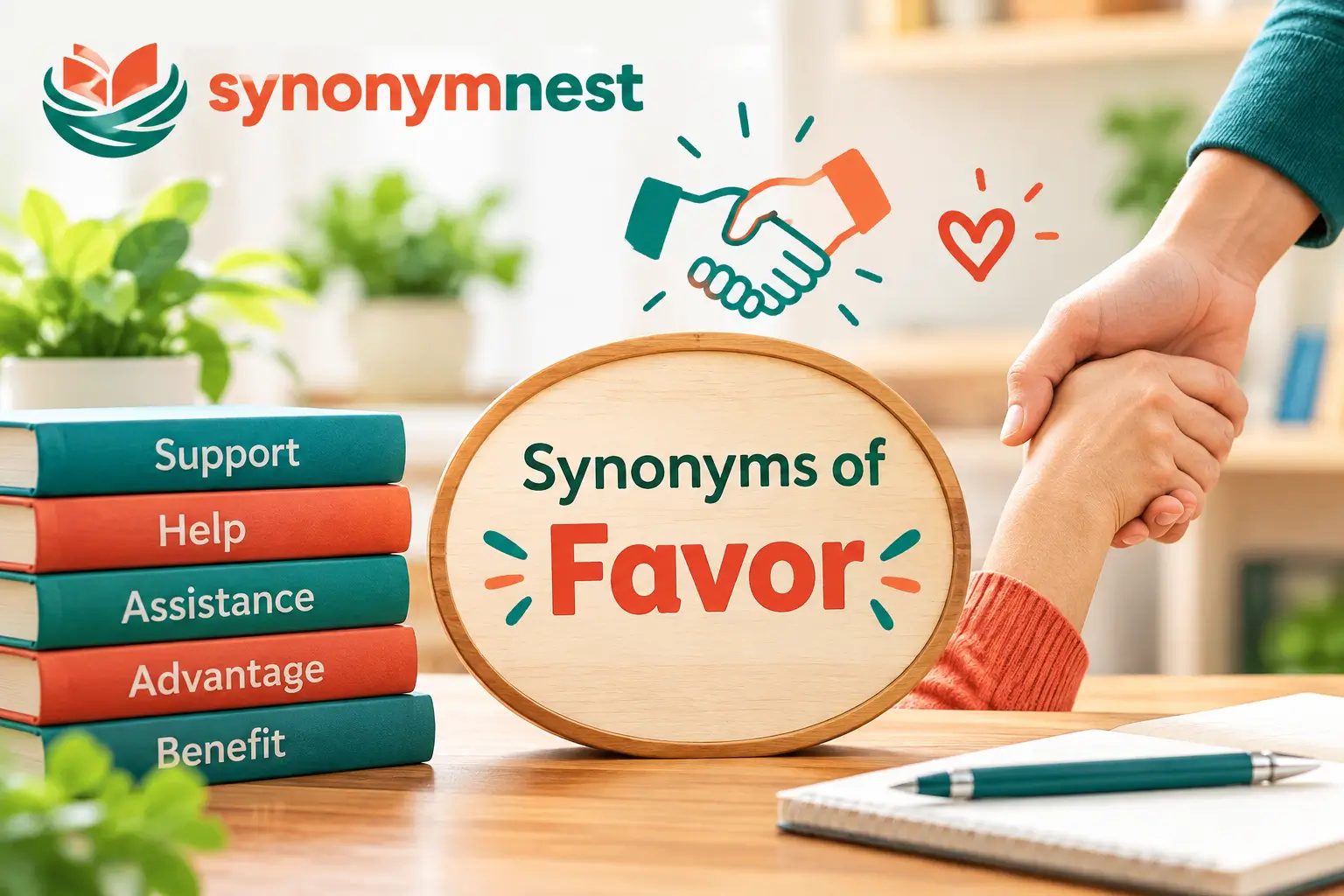
The word favor means a kind act, support, or preference given to someone. When you say “Can you do me a favor?” you’re asking for help. When a teacher “favors” one student, it means preference — sometimes fair, sometimes not.
Favor is used constantly in daily English — in conversation, business writing, and even legal language. Because it carries more than one meaning (kind act, approval, support, preference), knowing strong synonyms helps you avoid repetition and write with more precision.
Meaning of Favor
Favor (Noun / Verb): A kind act done to help someone; or support, approval, or preference for someone or something.
Examples:
- She did me a favor by lending her notes.
- The judge seemed to favor the defendant.
Connotation
- Positive: kindness, support, goodwill
- Negative: unfair preference (favoritism)
- Neutral: simple approval or choice
Etymology
The word entered Middle English from Old French faveur, itself from Latin favor (“goodwill, support”), related to the verb favere, “to be favorable to.” It became common in English usage after the Norman French influence on the language during the Middle English period (1100–1500).
Pronunciation
- US: /ˈfeɪvər/
- UK: /ˈfeɪvə/
Word Family (Affixation)
Favor itself is a root word with no prefix or suffix. But it forms a family of related words through suffixation:
| Word | Suffix Added | Part of Speech |
|---|---|---|
| favorable | -able | Adjective |
| favorably | -ably | Adverb |
| favorite | -ite | Noun/Adjective |
| favoritism | -ism | Noun |
| favored | -ed | Adjective/Past verb |
30 Synonyms of Favor
Kind Acts & Help
1. Help (Verb/Noun) — /hɛlp/ — to assist someone. Can you help me move this weekend?
2. Aid (Verb/Noun) — /eɪd/ — to give assistance, especially in difficulty. The charity aided flood victims.
3. Assistance (Noun) — /əˈsɪstəns/ — formal word for help. She asked the librarian for assistance.
4. Kindness (Noun) — /ˈkaɪndnəs/ — a gentle, helpful act. Thank you for your kindness during a hard week.
5. Courtesy (Noun) — /ˈkɜːrtəsi/ — a polite favor, often given as a formality. The upgrade was a courtesy from the hotel.
6. Service (Noun) — /ˈsɜːrvɪs/ — a helpful act performed for someone. He did the whole village a service by fixing the well.
7. Good turn (Noun, idiomatic) — a favor done in return for nothing. She did him a good turn when no one else would help.
Support & Approval
8. Support (Verb/Noun) — /səˈpɔːrt/ — to back or approve. The committee supports the new proposal.
9. Endorse (Verb) — /ɪnˈdɔːrs/ — to publicly and formally support something. The senator endorsed the bill.
10. Approve (Verb) — /əˈpruːv/ — to officially agree with or accept. The board approved the budget.
11. Approval (Noun) — /əˈpruːvəl/ — formal agreement or positive judgment. The design received final approval.
12. Back (Verb) — /bæk/ — informal word for support. Investors are backing the new startup.
13. Advocacy (Noun) — /ˈædvəkəsi/ — active public support for a cause. Her advocacy helped change the law.
14. Patronage (Noun) — /ˈpeɪtrənɪdʒ/ — support given by a sponsor or powerful backer. The gallery survived on royal patronage.
15. Blessing (Noun) — /ˈblɛsɪŋ/ — approval, often from someone with authority. They married with her parents’ blessing.
16. Consent (Noun/Verb) — /kənˈsɛnt/ — formal permission or agreement. She gave her consent to the plan.
Preference & Liking
17. Preference (Noun) — /ˈprɛfərəns/ — favoring one thing over another. He showed a clear preference for the older design.
18. Liking (Noun) — /ˈlaɪkɪŋ/ — a feeling of enjoyment toward something or someone. She has a liking for classic novels.
19. Inclination (Noun) — /ˌɪnklɪˈneɪʃən/ — a natural leaning or preference. His inclination was always toward science.
20. Partiality (Noun) — /ˌpɑːrʃiˈælɪti/ — a strong liking, sometimes unfair. The referee showed partiality toward the home team.
Benefit & Gain
21. Benefit (Noun/Verb) — /ˈbɛnɪfɪt/ — something helpful gained. The new policy will benefit small businesses.
22. Advantage (Noun) — /ədˈvæntɪdʒ/ — a helpful edge in a situation. Her experience gave her a real advantage.
23. Privilege (Noun) — /ˈprɪvəlɪdʒ/ — a special right or benefit not everyone has. It was a privilege to meet the author.
Mercy & Goodwill
24. Goodwill (Noun) — /ˌɡʊdˈwɪl/ — friendly, helpful intention. The gift was a gesture of goodwill.
25. Grace (Noun) — /ɡreɪs/ — kindness or mercy, especially when undeserved. The landlord extended grace on the late rent.
26. Mercy (Noun) — /ˈmɜːrsi/ — kind forgiveness, especially in judgment. The judge showed mercy in sentencing.
Formal & Institutional
27. Sanction (Noun/Verb) — /ˈsæŋkʃən/ — official approval or permission. The event went ahead with government sanction.
28. Ratification (Noun) — /ˌrætɪfɪˈkeɪʃən/ — formal, official approval of an agreement. The treaty awaited ratification by the senate.
Negative Sense
29. Favoritism (Noun) — /ˈfeɪvərɪtɪzəm/ — unfair preference toward one person. Employees complained about favoritism in promotions.
30. Bias (Noun) — /ˈbaɪəs/ — an unfair leaning toward one side. The report was criticized for bias.
Choosing the Right Synonym
| Context | Best Choice |
|---|---|
| Everyday, casual | help, back, liking |
| Formal/business writing | endorse, sanction, approval |
| Legal or official | consent, ratification, sanction |
| Emotional/relational | kindness, grace, mercy |
| Negative/unfair preference | favoritism, bias, partiality |
Antonyms of Favor
- Disfavor
- Opposition
- Disapproval
- Rejection
- Prejudice (against)
Quick Q&A
What does favor mean? A kind act, support, or preference shown toward someone.
Is favor always positive? No — it’s usually positive, but when it means unfair preference (favoritism), it’s negative.
What’s the difference between favor and favoritism? Favor is a general kind act or preference; favoritism specifically means unfair preference, often in a position of power.
When should I use “endorse” instead of “favor”? Use “endorse” in formal contexts — public statements, political support, or professional recommendations.
Conclusion
Favor is a flexible word — it can mean help, approval, or preference depending on context. Using precise synonyms like endorse, consent, partiality, or ratification instead of repeating “favor” makes your writing sharper and more professional. Match the synonym to the tone: casual words like help and back for everyday writing, and formal words like sanction or ratification for legal or business contexts.